Blue and white porcelain has traveled the world for six centuries — from the kilns of Jingdezhen to the tables of kings. Today the same cobalt-on-white language that once decorated imperial vases can sit on your wrist. This guide explains what blue & white porcelain actually is, how hand-glazing differs from mass production, and what to look for in a genuinely kiln-fired ceramic bracelet.
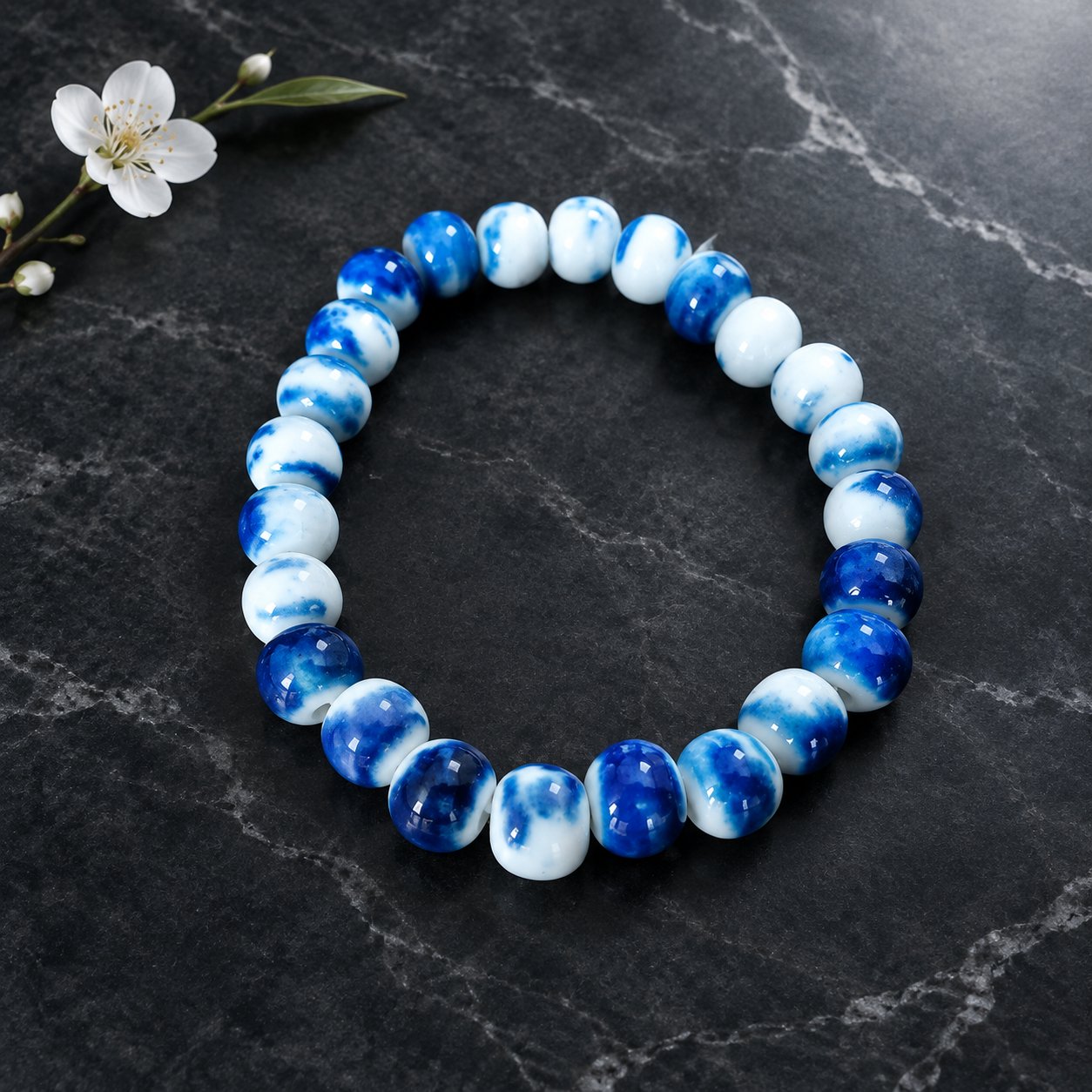
What Is Blue & White Porcelain?
Blue & white porcelain is ceramic decorated with cobalt oxide pigment painted under a clear glaze. The cobalt is brushed onto the unfired body, then a transparent glaze seals it in before the piece enters the kiln. During firing, the cobalt fuses with the glaze and produces a deep, slightly translucent blue that no surface paint or dye can replicate. Because the pigment sits under the glaze, true blue & white never rubs or chips its color off — the blue is part of the ceramic itself, protected for decades of wear.
From Imperial Kilns to a Wrist
This craft began as court porcelain, prized for a white body that let cobalt blue read with startling clarity. Over centuries the technique spread along trade routes and became one of the most recognized ceramic styles in the world. What made it special then is the same thing that makes it special now: the color is born in the fire, not applied afterward. Each firing produces its own subtle result — a slightly deeper swirl here, a softer bloom there — which is exactly what makes a hand-glazed piece feel alive next to a printed or painted imitation.
Hand-Glazed vs. Machine-Made
Machine-made beads are cast by the thousands and finished with a perfectly uniform glaze. Hand-glazed beads are different — each one is dipped or painted individually and fired in small batches, so the glaze pools, speckles and shifts in ways no two will ever match. The difference shows in three ways:
- Depth. Hand glaze has layers you can see into; a printed finish sits flat on the surface.
- Variation. Every hand-glazed bead is unique. If a line of "identical" beads has zero variation, it was not hand-glazed.
- Scarcity. A small-batch kiln can only fire so many pieces before the glaze batch runs out — which is why genuine hand-glazed work is released in limited runs rather than endless stock.
What Makes a Porcelain Bracelet Worth Wearing
A good ceramic bracelet should feel like jewelry, not a trinket. Look for an adjustable or stretch cord that sits comfortably, beads that are smooth and well-finished, and a glaze with visible depth rather than a flat printed pattern. Then there's the piece itself: our signature Porcelain Sky bracelet carries classic cobalt-on-cloud-white swirls — the same visual language blue & white porcelain has spoken for six centuries, reworked into a form you can wear to brunch.
Seven Glazes, Each Limited to 30 Pieces
The ZSYZDL STUDIO ceramic collection is seven hand-glazed bracelets, each fired in small batches and capped at 30 pieces per glaze. Alongside the blue & white Porcelain Sky, the line includes ocean-blue Tide Memory, peacock-blue Peacock Hour, near-black Midnight Ink, white jade & silver First Frost, multicolor Kiln Carnival and warm autumn Ember Season. When a glaze batch sells through, it is never re-fired — so each bracelet is, in a literal sense, unrepeatable.
How to Wear and Care for Ceramic Jewelry
Ceramic beads are durable when glazed and fired properly, but treat them like fine jewelry: wipe them with a soft, dry cloth after wear, keep them away from perfume and lotion, and store them separately so the beads don't knock against harder metals. Avoid wearing them in water for long stretches. With that small amount of care, a well-fired piece keeps its depth for years. For a "glow & glamour" pairing, a porcelain bracelet sits beautifully next to a soft ZSYZDL motion-sensor night light on a nightstand or vanity.
Reserve a Piece Before It's Gone
Every glaze is limited to 30 pieces and will not be re-fired once it sells through. Join the list to hold your spot and get notified the moment the collection launches.