A motion sensor night light only works as well as where you put it. Mount it too high and it misses you stepping into the hall; too low and it triggers every time the dog walks by. Get the height and angle right, and the light stays invisible until you need it — switching on exactly when you step into the dark and off again after you pass. This guide walks through installing a magnetic motion sensor light properly, plus how to position it for fewer false triggers and full coverage.
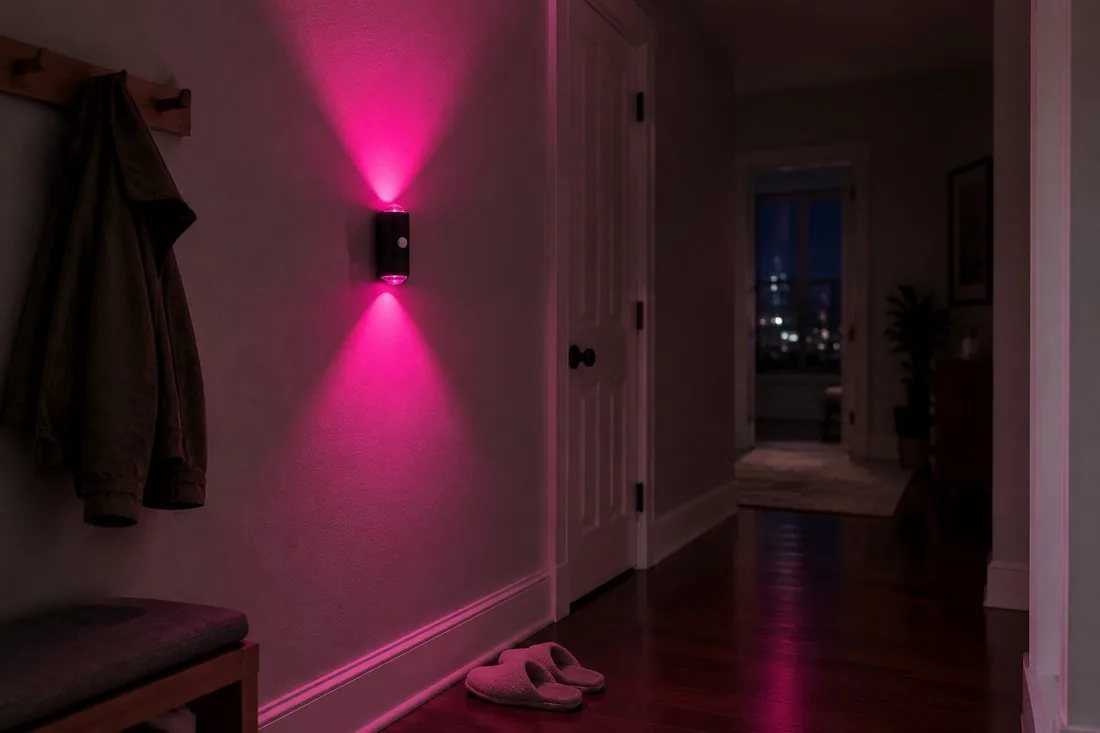
What You're Working With
ZSYZDL wall lights are magnetic and no-drill by design. Each light ships with a slim metal plate backed by adhesive — you stick the plate, then the light snaps onto it magnetically. That means no tools, no wiring, and no wall damage. The light recharges over USB-C and senses motion up to 16 feet away using a passive infrared (PIR) sensor that responds to body heat and movement.
Step-by-Step Installation
- Prep the surface. Wipe the wall with a dry cloth or a little rubbing alcohol. Adhesive holds best on smooth, clean, dry surfaces — painted drywall, tile, or wood. Skip textured or dusty spots.
- Peel and press. Remove the backing from the metal plate and press it firmly against the wall for about 30 seconds.
- Wait before hanging. Let the adhesive cure for a few hours (ideally overnight) before snapping the light on. This stops the plate from sliding under the light's weight.
- Snap the light on. The magnet aligns itself — bring the light close and it seats into place.
Positioning: Height and Angle Matter Most
PIR sensors read heat in a fan-shaped zone, so the light sees best when it's pointed at the path people actually walk. Two rules cover most rooms:
- Mount 3 to 5 feet off the floor. This puts the sensor at waist-to-chest level, where it catches a person's body heat reliably.
- Aim it slightly downward. On stairs or in hallways, tilt the light so the sensor faces the walking path rather than straight out. This focuses detection where feet actually travel.
For the slim ZSYZDL Vector V1 motion light, this height band also keeps the light itself out of your direct eye line, so you get the glow without the glare.
Cutting Down False Triggers
If the light turns on when nothing's there, the sensor isn't broken — it's seeing something. The usual culprits:
- Pets. Mount high enough that a cat or small dog walking below doesn't cross the detection zone, or aim the sensor up and away from the floor.
- Air movement. HVAC vents, fans, and drafts can push warm air into the sensor's view. Point the light away from vents.
- Windows and heat sources. Direct sunlight or a radiator cycling on and off reads as a heat change. Mount the light where the sensor doesn't face a window.
Where to Position It, Room by Room
Hallway — around 4 feet up, angled toward the center of the hall so it lights the full walkway. Stairs — near the top or bottom landing, angled down the steps to light each tread. Bathroom — on the wall beside the mirror or near the door, angled so the sensor catches entry without staring at the shower. Closet — above the door or on a side wall, angled into the space so it turns on as the door opens. For multi-room setups, a 2-pack covers hallway plus bathroom in one pass. For a deeper dive into room choice, see our zone-by-zone lighting guide.
The Black Finish for Darker Rooms
On dark walls or in a gaming den, the matte-black BACK motion light disappears into the wall while still projecting color both up and down. It installs the same way — peel, stick, snap — so the positioning rules above apply unchanged.
Give It a Test Run
After mounting, walk the room at night. If the light misses a corner, nudge the angle; if it triggers too often, raise it an inch. Because the mount is magnetic, you can adjust or relocate without leaving a single hole in the wall. For battery and charging expectations once it's up, see our battery life guide.
Install It Right the First Time
No drilling, no wiring, and no wall damage — just a magnetic plate and the right angle. Prices and availability change on Amazon US, so see the current price on Amazon.